
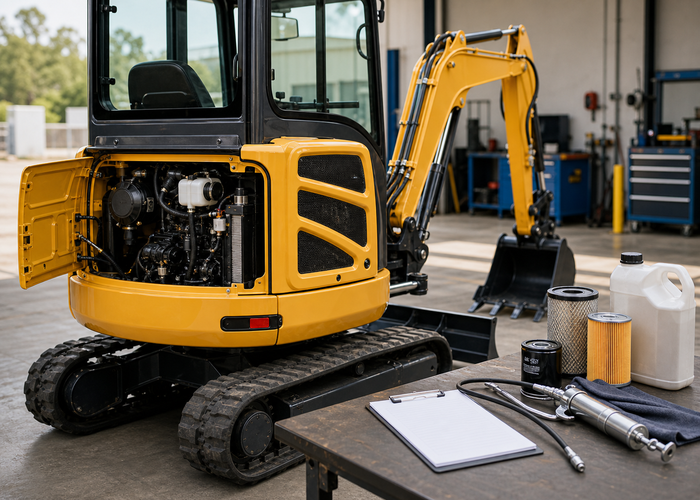
A mini excavator earns money only when it starts, moves, digs, and returns safely. Maintenance is not a separate activity from productivity; it is the foundation of productivity. Before you build a service routine, review your equipment plan through our mini excavator resources, and keep safety references such as OSHA excavation guidance in your operator file.
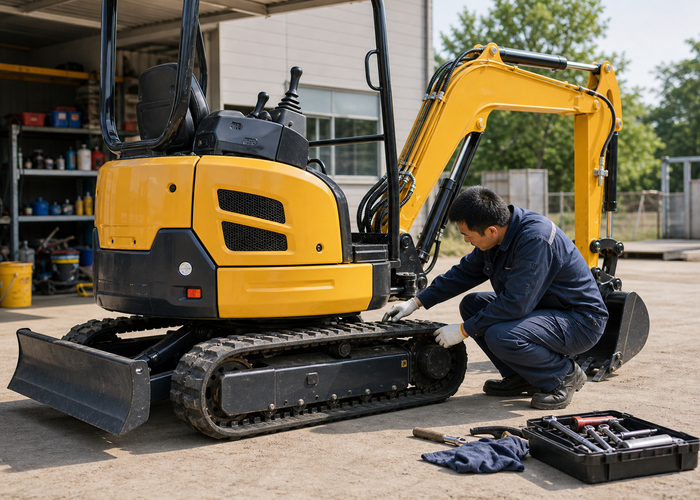
Why Daily Checks Matter
Small machines are often used by mixed-skill operators, rental customers, farm workers, landscapers, and first-time owners. That makes a daily checklist especially important. A loose track, dry pin, leaking hose, clogged filter, or damaged bucket tooth can become a bigger repair if ignored.
Your goal is not to turn every operator into a mechanic. Your goal is to make basic problems visible before work starts.
The 10-Minute Walkaround
| Area | What to Check | Why It Matters |
|---|---|---|
| Ground under machine | Oil, fuel, coolant, or hydraulic leaks | Finds problems before startup |
| Tracks | Tension, cuts, missing chunks, packed mud | Protects travel motors and undercarriage |
| Pins and bushings | Dry joints, unusual play, missing retainers | Reduces wear in boom, arm, and bucket |
| Bucket and teeth | Cracks, loose teeth, worn cutting edge | Maintains digging performance |
| Hydraulic hoses | Rubbing, swelling, wet fittings, exposed reinforcement | Prevents sudden hose failure |
| Engine access | Fluid levels, belts, wiring, filter condition | Supports reliable starting |
| Blade | Mounting points, cylinder, cutting edge | Helps grading and machine stability |
| Controls | Smooth response, neutral position, warning lights | Protects operator and machine |
Greasing Is Not Optional
Grease is one of the cheapest forms of machine protection. Boom, arm, bucket, blade, swing, and attachment pivot points should be greased according to the service schedule and actual working conditions. Mud, dust, water, and demolition debris can shorten intervals.
If you hear squeaking or see dry metal movement, the machine is already asking for attention. For rental fleets and dealer customers, put grease points into a visual checklist and train operators to report missed or damaged fittings.
Hydraulic System Checks
The hydraulic system is the heart of a mini excavator. Before work, inspect visible hoses, fittings, cylinders, and the hydraulic tank area. Look for wetness, cracked hose covers, rubbing points, and damaged guards. During operation, watch for slow movement, drifting boom, weak swing, abnormal noise, or overheating.
Never use your hand to search for a hydraulic leak. High-pressure fluid can be dangerous. If a leak is suspected, stop the machine and follow proper service procedures.
Tracks and Undercarriage
Rubber tracks help mini excavators work on finished surfaces, but they need attention. Clean packed mud, stones, and debris from the undercarriage. Check for cuts, deep cracks, missing tread blocks, and incorrect tension. A track that is too tight can accelerate wear. A track that is too loose can derail.
For buyers and dealers, ask the factory for track tension guidance, replacement part numbers, and photos showing the tensioning point. This makes after-sales support much easier.
Daily Maintenance Record
Use a simple log:
| Item | OK | Needs Attention | Notes |
|---|---|---|---|
| Fluid levels | |||
| Grease points | |||
| Hydraulic leaks | |||
| Track condition | |||
| Bucket/attachment | |||
| Safety labels/lights | |||
| Test operation |
If you manage several machines, keep this record with each serial number. A documented routine helps diagnose problems and supports warranty discussions.
Storage and End-of-Day Habits
At the end of the day, clean the undercarriage, lower the attachment to the ground, park on stable level ground, check for new leaks, and protect the machine from weather where possible. If the machine will sit for a long period, follow the supplier’s storage instructions.
If you need a machine package with manuals, parts lists, and service support, send your requirements through our contact page.
Final Technical Advice
Daily maintenance is not complicated, but it must be consistent. A mini excavator that receives regular grease, clean filters, track checks, hydraulic inspection, and careful operation will usually deliver more reliable work. Build the habit before problems appear.
FAQ
How often should a mini excavator be greased? Follow the machine manual, but dusty, muddy, or heavy attachment work may require more frequent greasing.
What is the most common daily maintenance mistake? Skipping track cleaning and grease points. Both can create avoidable wear.
Should operators check hydraulic hoses every day? Yes. Look for rubbing, swelling, wet fittings, and damaged covers before work starts.
Do small excavators need maintenance logs? Yes. Logs help owners, dealers, and service teams understand machine history.